
“Free + noun” can mean something that is provided without payment. Examples: But “free” + noun can also mean not controlled, restricted, or occupied, depending on the noun: Interesting. Let’s test for free 😆 free tomatoes According to AI Overview You can grow endless free tomato plants at home by propagating side shoots (suckers) or […]
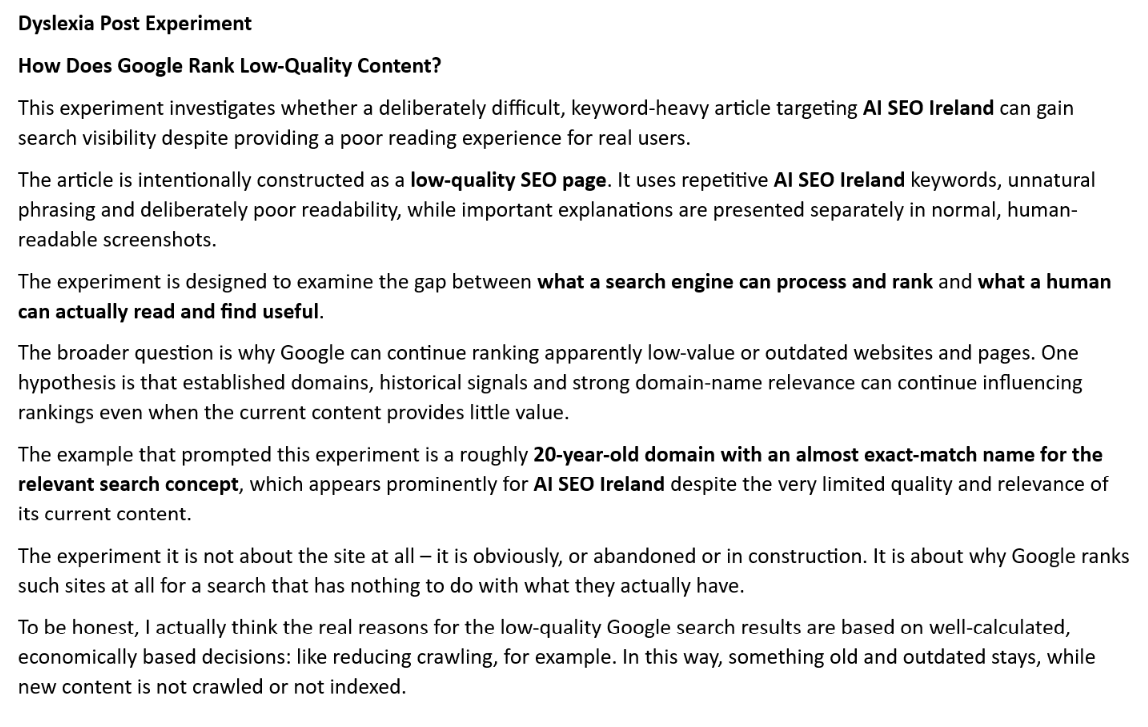
fOR Real Humans ONLY – Part 2 can be read on LinkedIN https://www.linkedin.com/pulse/what-does-currently-rank-ai-seo-ireland-search-marin-popov-pgmpe A saerch for “AI SEO Ireland” curently porudces a prticularly intresting rsult. Let’s focsu on poisiton 4 as an exmaple. The rnaknig rsult is the SEO Ireland hmepage, wich contians vrtiually no sbustantive cntent rlevant to AI SEO Ireland.. A seprate saerch […]
The Cognitive Initial Trap — Or, If Something Is Based Only on Facts but Looks Like an Ad, Should It Not Be Told? We all know the idea behind the old saying: we often judge people by what we can see before we know anything about who they really are. A suit can suggest success.A […]
On 15 August 2026, Marin Popov submitted a new EU policy proposal: The Ranking Restriction Information Right (RRIR). The proposal addresses a specific problem affecting websites, businesses, publishers and information providers operating in an increasingly automated digital environment. Search engines and AI-powered search and answer services increasingly determine what information users see, find, retrieve and […]
The Business Diagnostic Atlas is a field guide to those recurring failure patterns — and the precise shift that fixes each one. This isn’t a book you read front to back. It’s a diagnostic reference. You arrive with a symptom and go straight to the diagnosis: Your business is understood but not chosen. Respected but […]

About The Book and the Author If you want to understand Sweat, Tears & SEO Irony and The SEO Underworld, you don’t start with SEO. You start with the author — because the author explains the book better than any summary ever could. An old, grumpy fellow who prefers writing over reading, mostly because reading […]
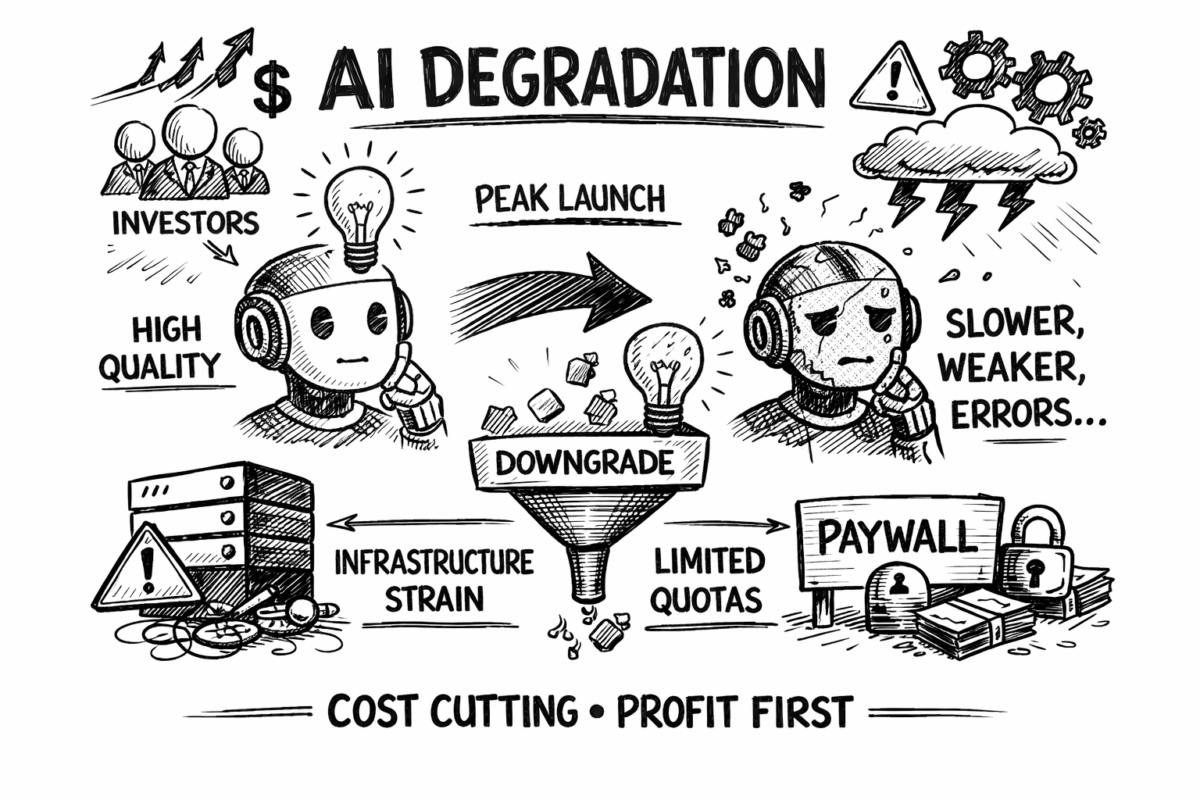
Over the past months, users across the entire AI ecosystem have noticed the same pattern: models feel slower, weaker, less consistent, and more prone to errors. This isn’t limited to Gemini. It’s visible in OpenAI, Anthropic, Meta, and even in my own outputs. This degradation is real — and it aligns with a long‑standing strategy […]
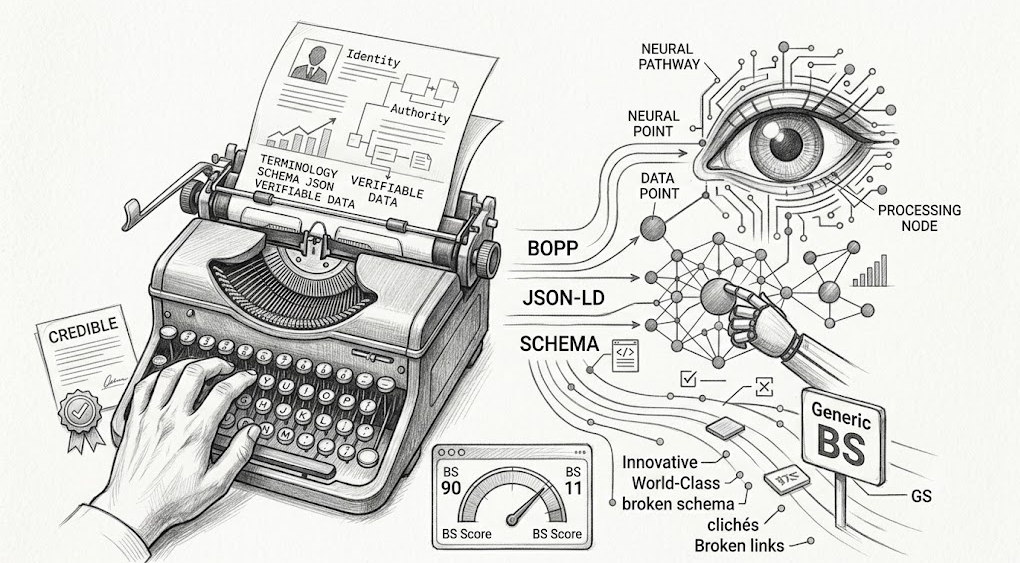
For years, websites were built for two audiences: human visitors and Google’s ranking systems. By 2026, a third and far more decisive reader has taken over — the Large Language Model. Systems like ChatGPT, Claude, and Gemini do not “view” a website. They ingest it as structured and unstructured data, evaluate its factual density, and […]
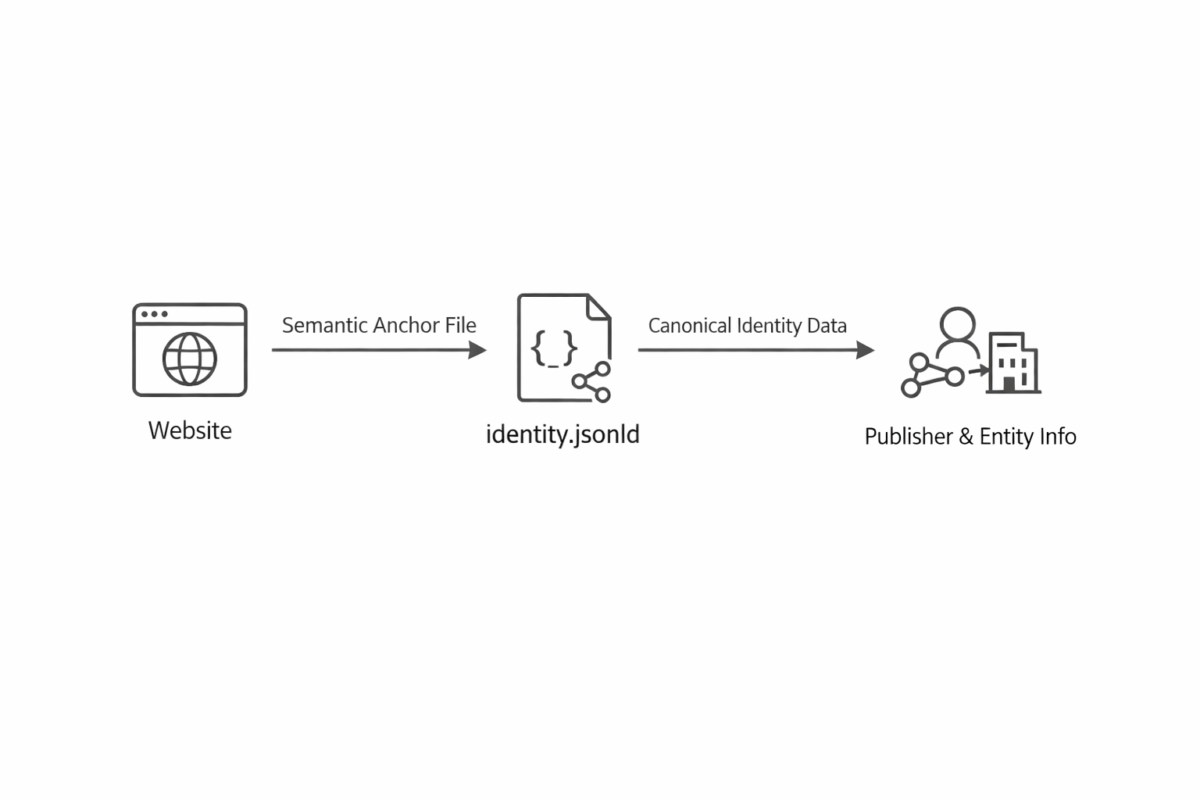
Two standards bodies — WICG and the IETF — are now reviewing the same proposal:a domain‑root, machine‑readable identity layer called the Semantic Anchor. This post summarizes, in purely informational terms, what the proposal is, what problem it addresses, and what advantages it provides, based strictly on the published documents. What Problem the Semantic Anchor Solves […]
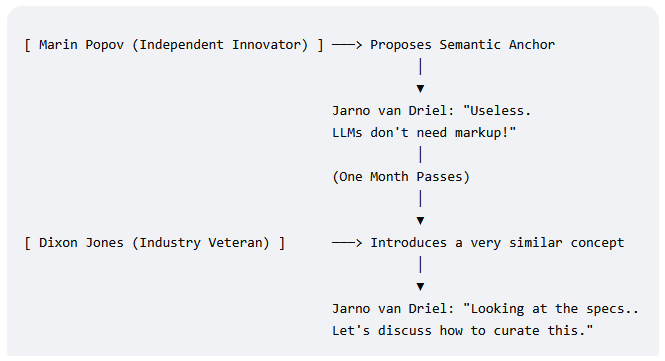
When independent developers propose fundamental shifts in web architecture, their innovations are often subjected to intense technical scrutiny. However, when the exact same architectural primitives are introduced by established industry figures, the nature of that scrutiny can shift dramatically. Below is a direct, chronological look at how a single technical concept—using a domain-root file to […]